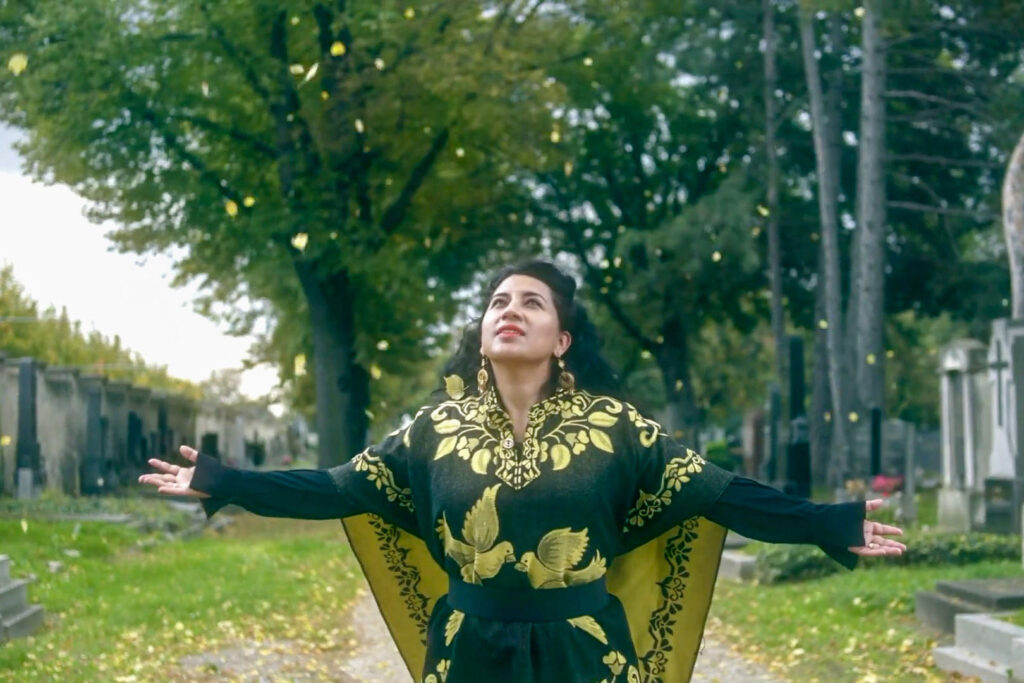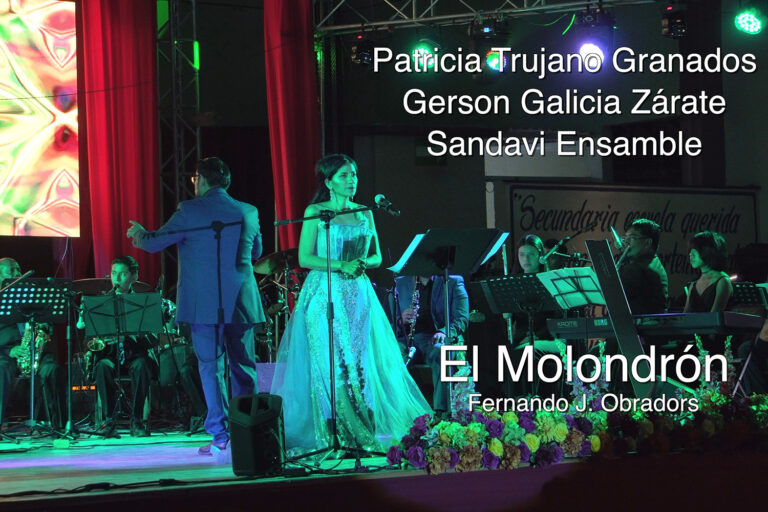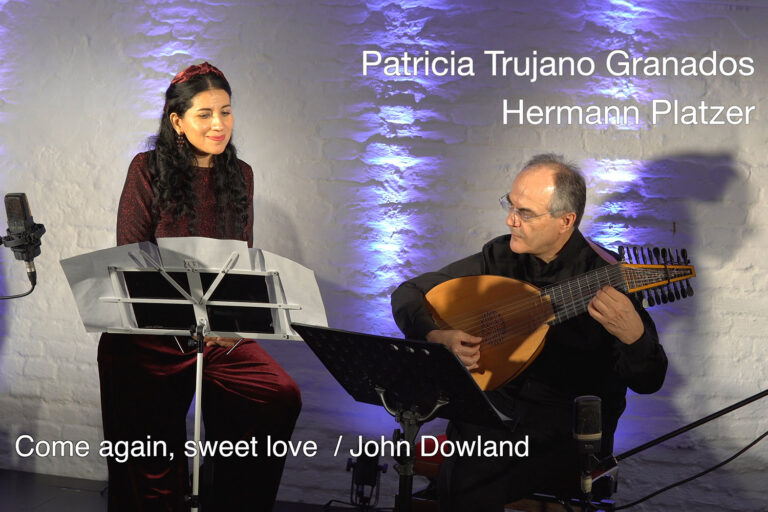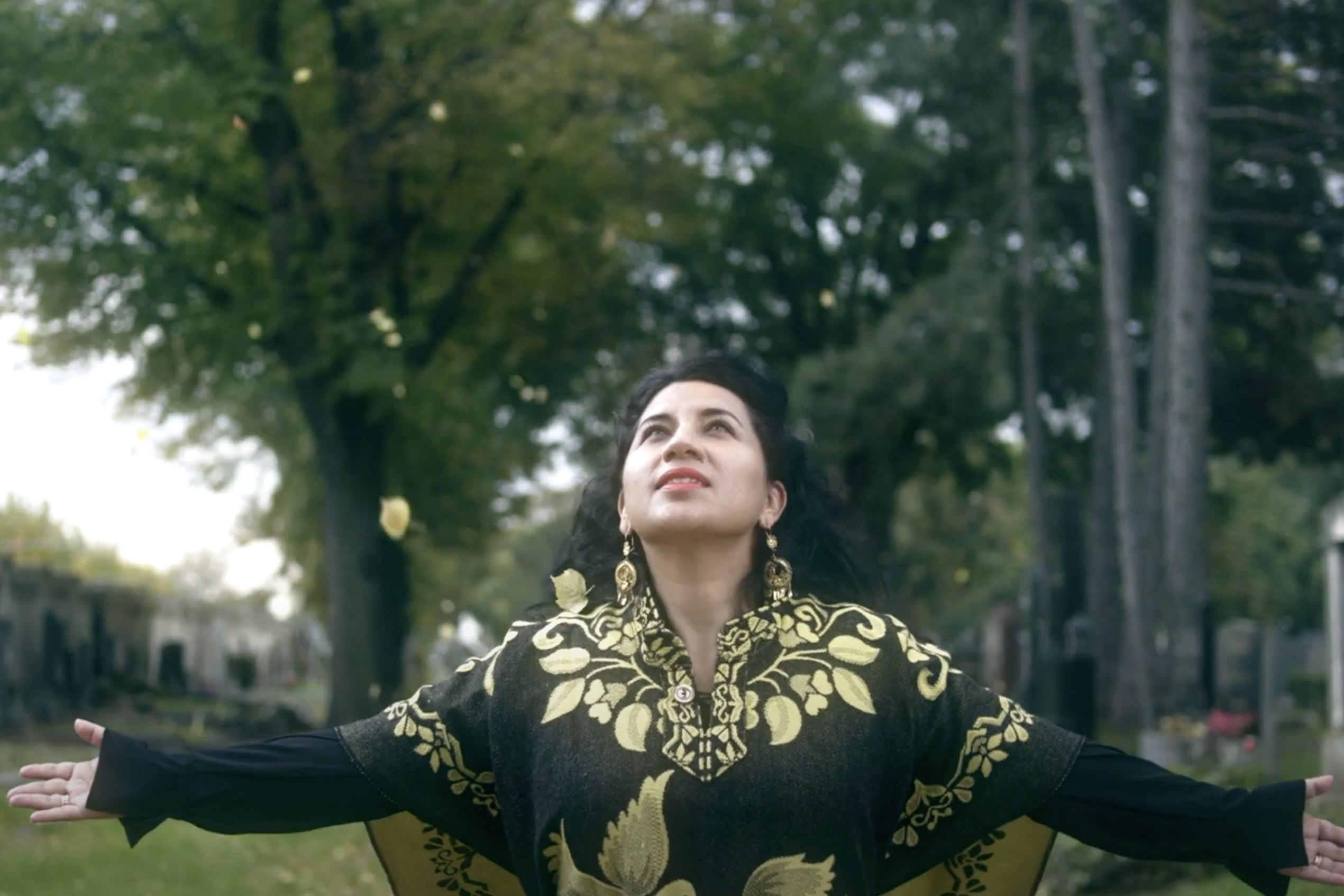
Ave Maria/Caccini/Vavilov/Patricia Trujano&Andreas Wagner
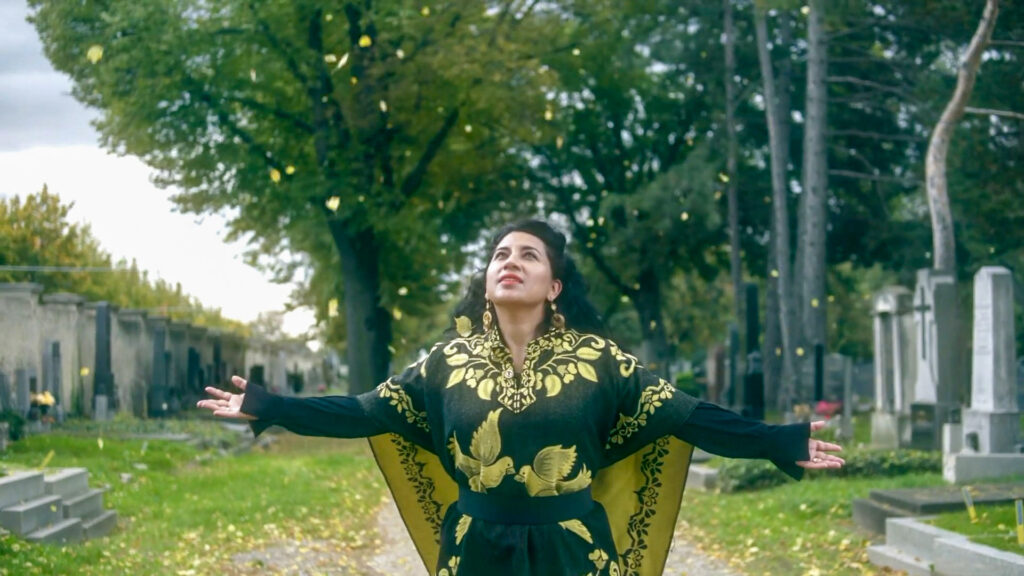
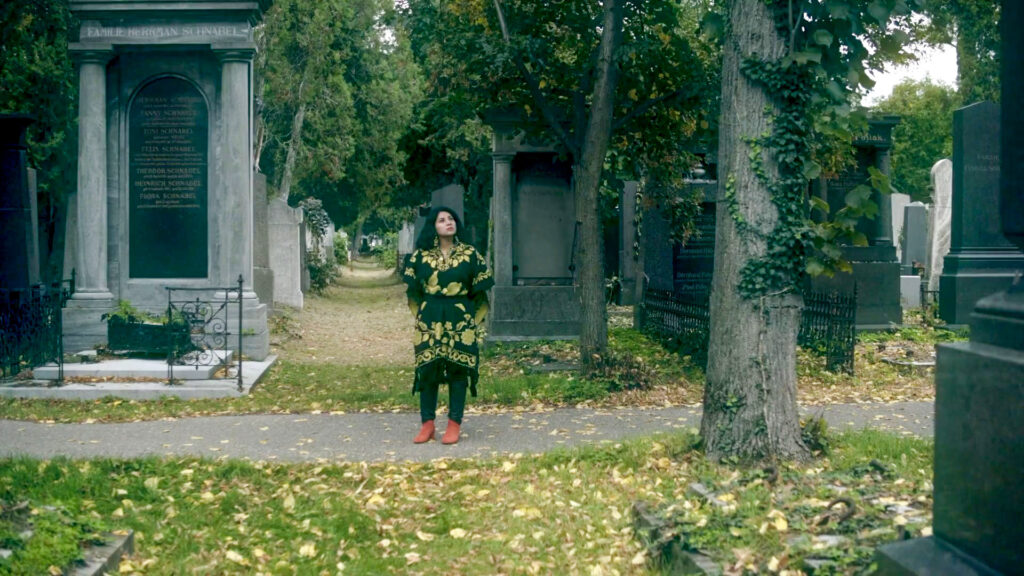
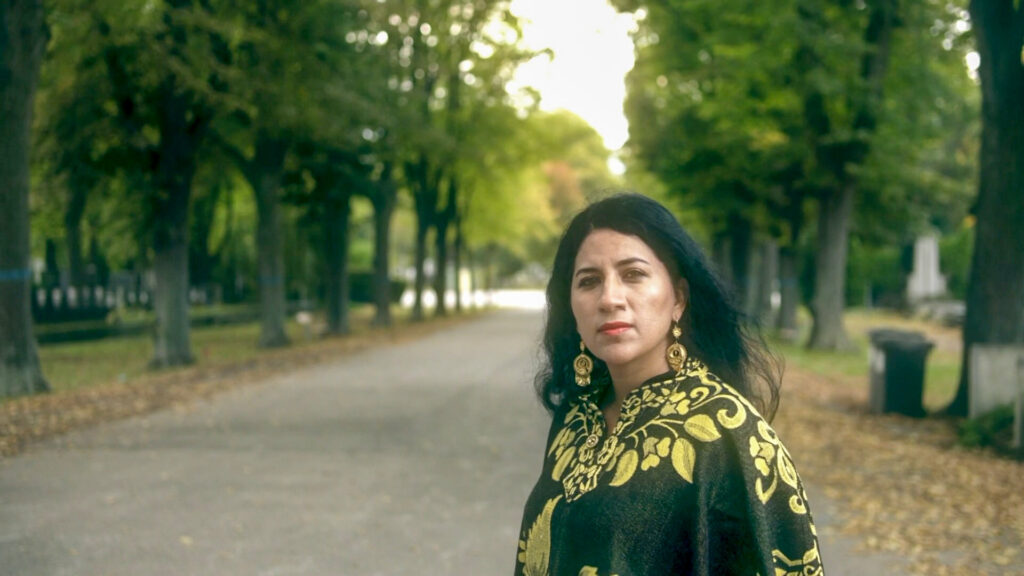
In memory of all our loved ones who are no longer with us. In this life we are certainly assured of something: DEATH; and it doesn't matter if you are rich or poor, man or woman, young or old… We all end up at the same place. Walking through the cemetery makes me remember how fragile our existence is., how short and fleeting our lives are
Vienna Central Cemetery — Where music greats are never silent
There are places that you visit only once.. And then it always comes back. The Vienna Central Cemetery — theCentral Cemetery — is one of those places. Who walks for the first time among its old trees, its funerary monuments full of art and the soft whisper of the wind, You immediately understand why the Viennese do not consider their Zentralfriedhof a place of sadness, but a very special part of your city — with pride, with humor and with that typically Viennese mix of melancholy and joie de vivre that cannot be found anywhere else in the world.
A colossus on the edge of the city
With an area of almost two and a half square kilometers, nails 330.000 plots and approximately three million deceased, The Vienna Central Cemetery is among the largest burial grounds in Europe. Inaugurated in 1874, It was conceived from the beginning for all citizens, without distinction of religion, origin or social status. Today it houses, next to the catholic graves, evangelical sections, beans, islamic, Orthodox and even Buddhists. A small, silent reflection of the world, there in the Simmering district.
The road to get there ran through an uninviting landscape for a long time.. Contemporaries complained: "So far, between slaughterhouses, moors and villages! What a long and tiring journey to Simmering!» The Viennese responded by staying away. The new cemetery was huge, but not exactly what you would call a lively place - in the most literal sense of the expression.
That was about to change.. And the key was an idea as Viennese as the waltz: bring the famous people here.
The idea that changed everything
In 1881, The Vienna City Council decided to create special honorary graves for prominent personalities. The director of the archive, Karl White, was commissioned to draw up a list of figures whose merits would justify the dedication of a tomb at the city's expense.. The calculation was simple: if no one wanted to voluntarily go to Simmering, had to give him a reason. And what better reason than Beethoven?
The mortal remains of famous personalities were transferred from other cemeteries to the Zentralfriedhof — notable examples are Ludwig van Beethoven and Franz Schubert, whose original graves in the area of today's Schubertpark are also preserved as monuments. A curious situation: Beethoven now rests in two places at the same time — at least symbolically. The Viennese thought it was good. They went there, They visited the pantheons of honor and the Central Cemetery became what it remains today: a place of pilgrimage.
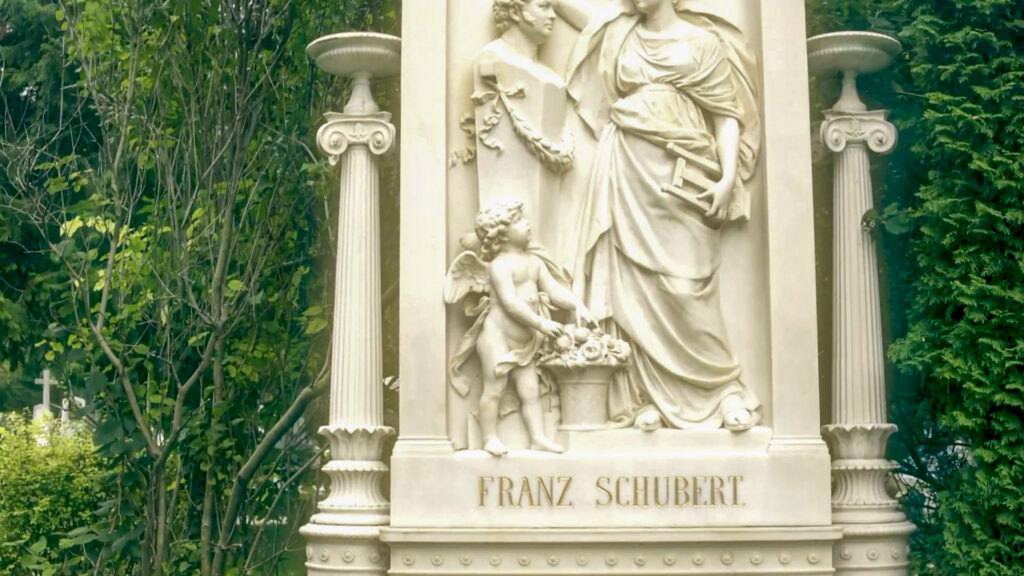
The group of composers — a pantheon of music
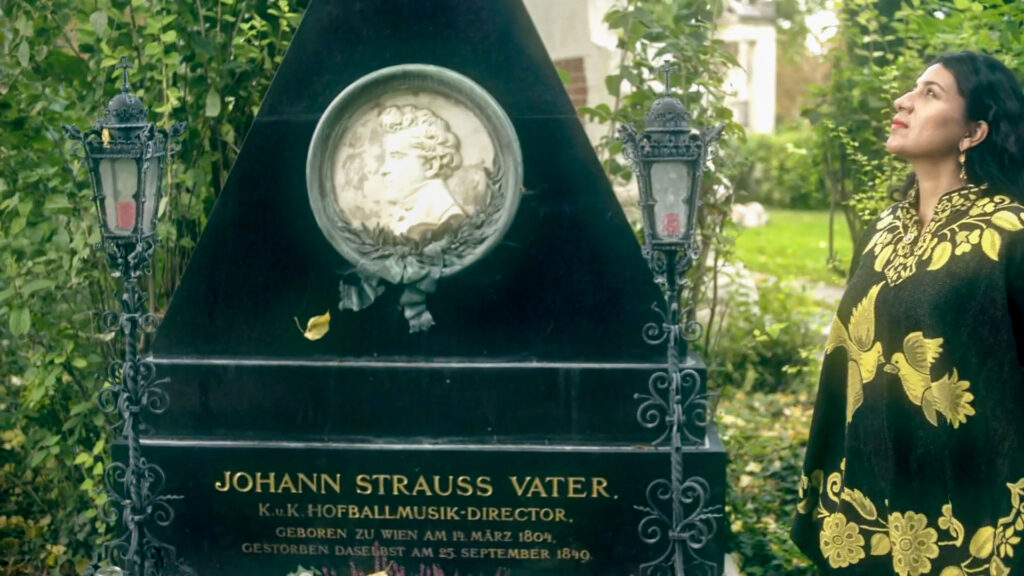
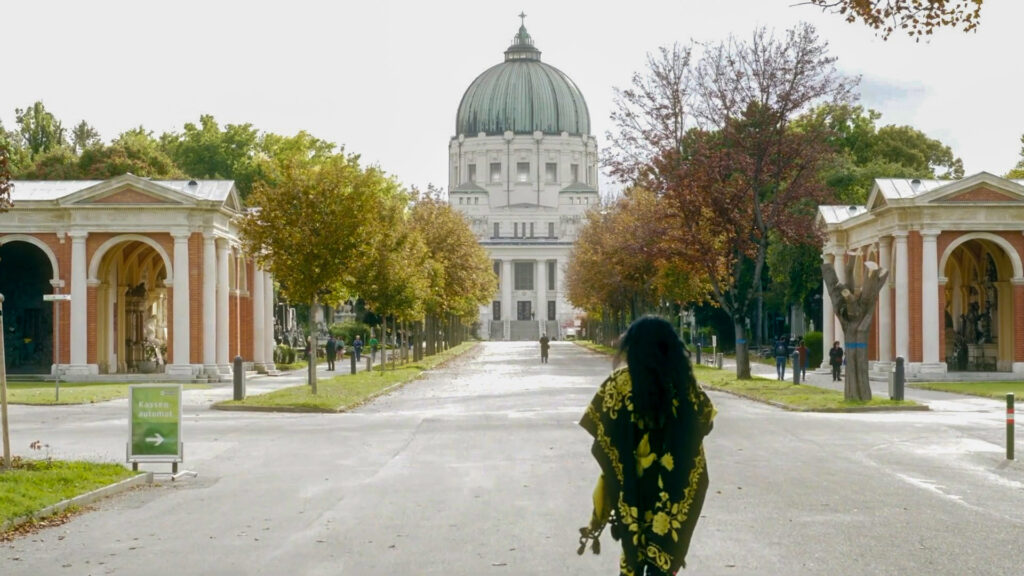
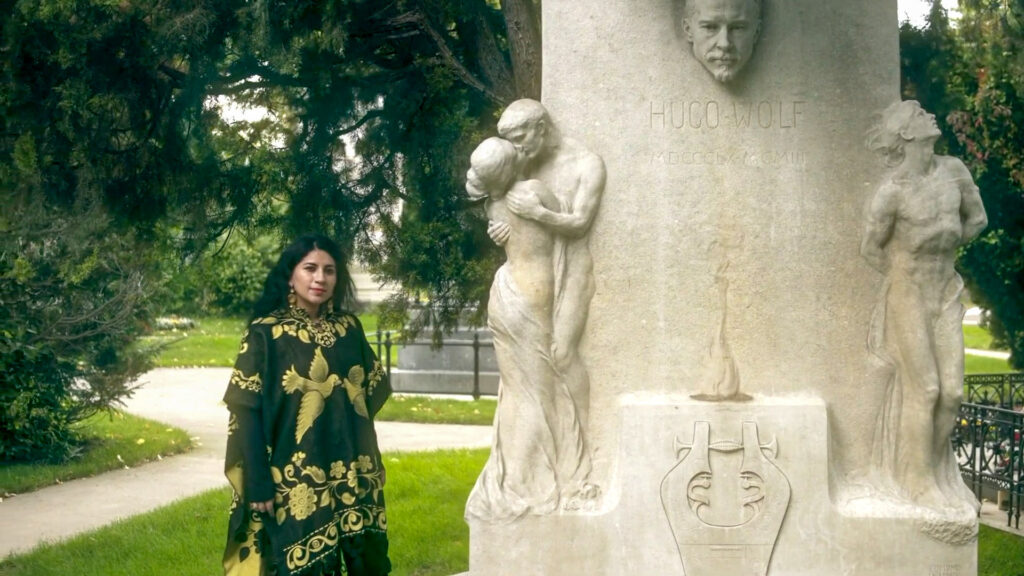
Who enters through the Door 2 and advance in a straight line towards the imposing church of San Carlos Borromeo discover, to the left and right of the main avenue, what could well be considered the largest concentration of honorary tombs of musicians in the entire world. In group 32a are the Gluck tombs, Beethoven, Schubert, Hugo Wolf, Johann Strauss father and son, Lanner and Brahms; in group 32c, those of Arnold Schönberg, Hans Moser, Robert Stolz, Theo Lingen and Curd Jürgens.
Imagine: Beethoven and Brahms as neighbors. Johann Strauss father and son, artistic rivals in life, now forever side by side. And in the middle of everything, the careful funerary monument of Franz Schubert, who in life barely received the recognition he deserved in Vienna — and who now resides here forever in the best company.
The mausoleum of Johann Strauss Jr. is in itself a small work of art: a bat for the operetta of the same name, and a couple dancing a waltz, symbol of their dance music. The symbols speak for themselves. Vienna has not forgotten its waltz king.
It is also worth noting that not only the most famous rest here. The so-called group of composers houses, with Beethoven, Brahms, Schubert and the Strauss dynasty, also the tombs of less world-known composers — people who marked their era without necessarily appearing in all history books. A silent reminder that art history is always made up of many more names than we remember.
Falco, Udo and the immortality of pop
But Vienna would not be Vienna if the Zentralfriedhof belonged only to the classics. Because popular culture also has its sanctuaries here — and none are frequented with as much passion as Falco's tomb..
Falco, often described as the "first white rapper", was buried in the group 40, plot number 64. His funerary monument consists of an obelisk and a quarter-circle armored glass plate.. The ascending arc evokes his career, abruptly interrupted by death, symbolically represented by the toothed fracture. Fans from all over the world make a pilgrimage here, leave flowers, letters and discs. The tomb is a true place of worship — as if Falco, who lived his entire life for the public's attention, he would also have secured the best address in Vienna in death.
Not far from there rests Udo Jürgens, died in 2014. A white grand piano stands above his grave., symbol of the artist's connection with music and his legendary career as a pianist and singer. Whoever has ever seen that snow-colored instrument in the middle of a cemetery, under old trees, understand why the Viennese love their Zentralfriedhof so much. Here death is not gray — it has color, shape and, sometimes, even a white concert piano.
And then there's Hedy Lamarr — actress, Hollywood icon and, what many ignore, brilliant inventor: His funerary monument shows his portrait in three dimensions. A tombstone like a movie poster. Behind, almost shyly, the tomb of the caricaturist Manfred Deix — crowned by the figure of a cat. The Zentralfriedhof has, how it looks, sense of humor.
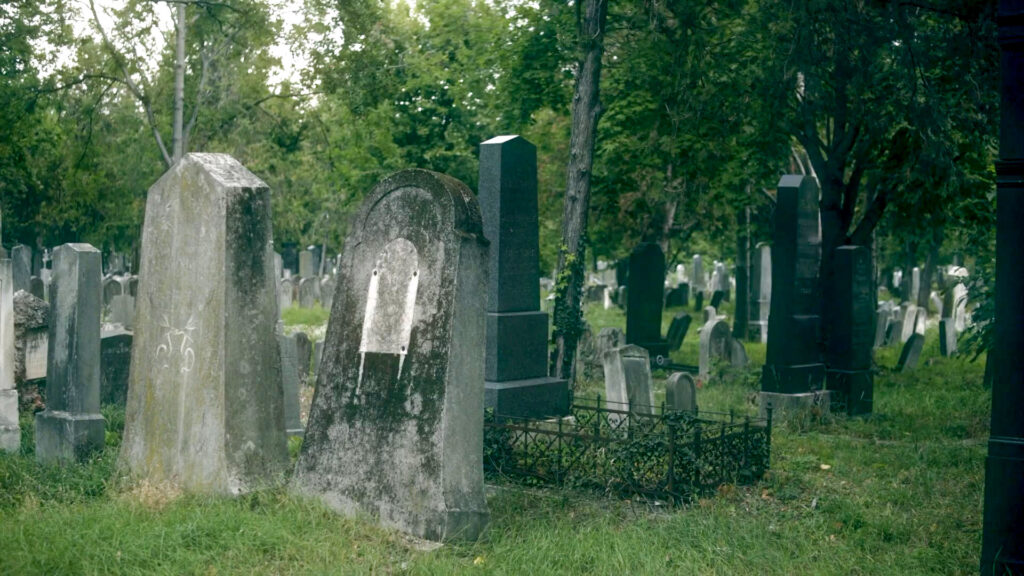
The Jewish section — a forgotten Vienna
In addition to the Catholic section, There is also a Protestant, other orthodox, and two Jewish cemeteries. Although the oldest of these, created in 1863, It was destroyed by the Nazis during Kristallnacht, are still preserved 60 000 graves. The second Jewish cemetery was built in 1917 and is still used. Who enters through the Door 1 access another world. The ancient Israelite section of the Central Cemetery is one of the most impressive and at the same time quietest parts of the entire complex.. Here lie generations of Viennese Jewish society — doctors, lawyers, merchants, artists — whose families were expelled or killed after 1938. Many graves no longer receive flowers; no one comes to remember them. And yet: At the end of the tree-lined paths you discover well-known names such as Arthur Schnitzler, Friedrich Torberg, Gerhard Bronner o Viktor Frankl.
It is a walk through a Vienna that no longer exists — and that at the same time is still here, engraved in stone, under old trees. No place in the Zentralfriedhof makes the weight of history as tangible as this.
Architecture between splendor and silence
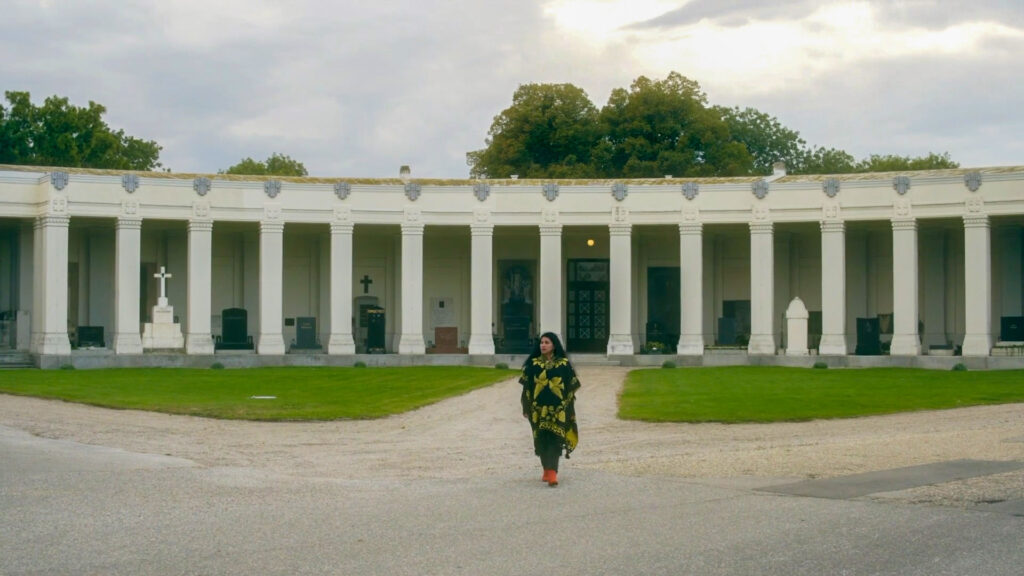
The Zentralfriedhof is also an architectural experience. In its center stands the church of San Carlos Borromeo, designed by Max Hegele in Jugendstil style — one of the most beautiful religious buildings in Vienna, and all this in the middle of a cemetery. The crypts with arcades along the walls of the enclosure are outstanding examples of Viennese funerary architecture.: facades decorated with care, frescos, mosaics — mausoleums that look like small cathedrals.
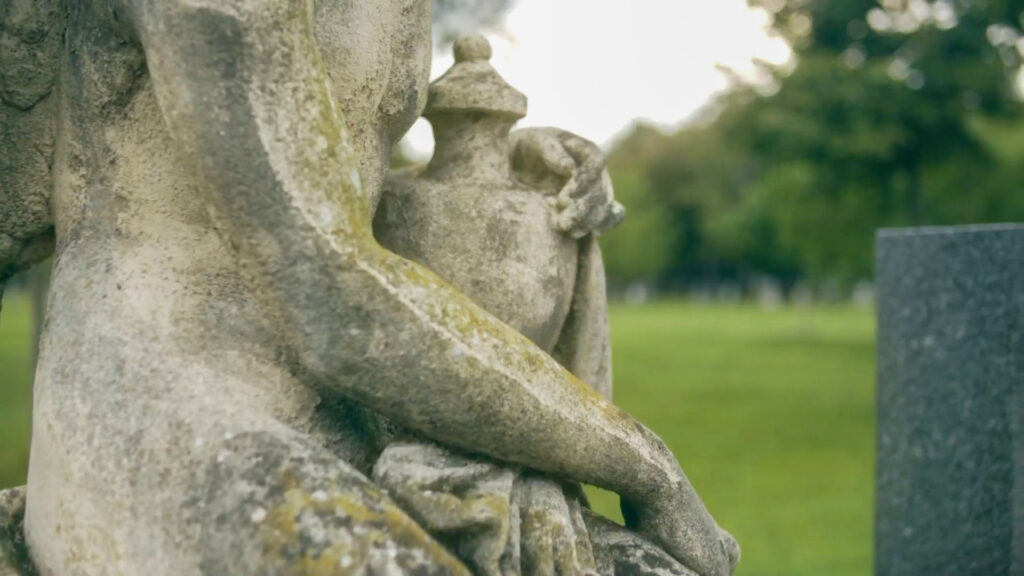
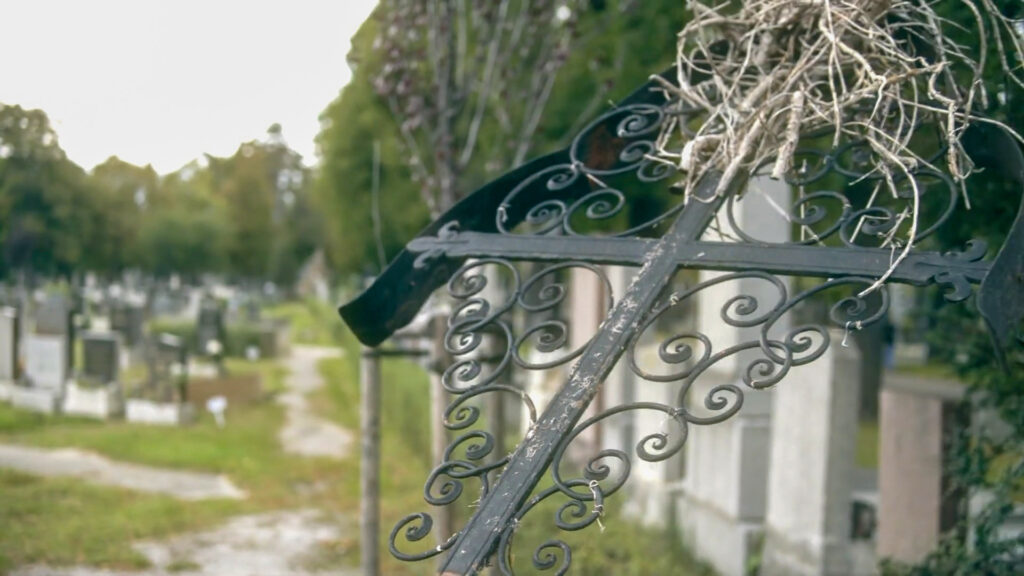
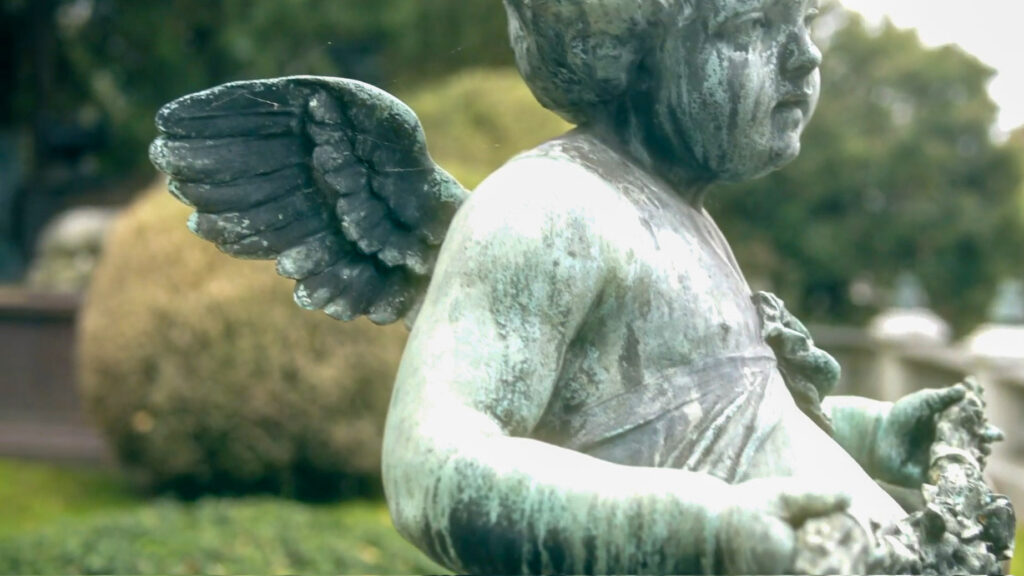
Added to all this are countless individual monuments created by the best sculptors of their time.. Here a tombstone is not simply a stone — it is a work of art, a statement, sometimes even an enigma.

A natural paradise with three million neighbors
What surprises many visitors: The Central Cemetery is a natural paradise ideal for long walks — just as popular with runners and cyclists as it is with those on foot. If something moves in the bushes, no one should fear the dead: the Zentralfriedhof is the habitat of roe deer, wild hamsters, squirrels, badgers, March, kestrels and many other animal species.
A roe deer between Beethoven and Brahms — that's Vienna. Serious and playful, historic and alive, melancholic and full of wit.
«¡Viva el Central Cemetery!»
Wolfgang Ambros dedicated him to the Central Cemetery in 1975 an immortal song. And he was absolutely right: this place lives. Lives thanks to visitors who reach hundreds of thousands on All Saints' Day. Live thanks to the fans who decorate Falco's grave with fresh flowers. Lives thanks to the musicians who stop at Schubert's tombstone and remain silent. And he lives thanks to that very Viennese ability to look at death with a smile — or like Helmut Qualtinger, with a sprig of lavender in her hand, on the way to Simmering on the tram 71.
The fences of 950 Honorary graves of the Vienna Central Cemetery are a fragment of the city's cultural history and the highest recognition that Vienna can bestow beyond death. Musicians rest here, painters, writers, actors and inventors — people who made Vienna what it is. And anyone who has ever walked among their tombs understands it.: the Zentralfriedhof is not an end. It is a very long echo, very quiet — and sometimes surprisingly cheerful.