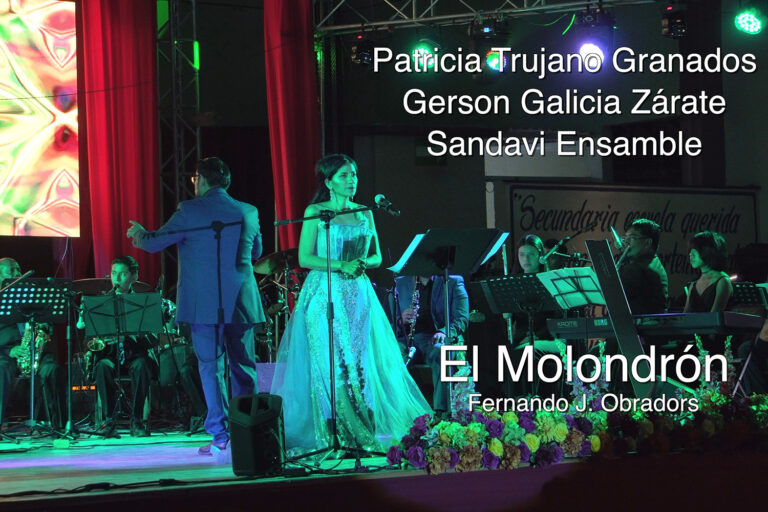
A gift for this weekend and desando that this beautiful music will find well where they listen to me.
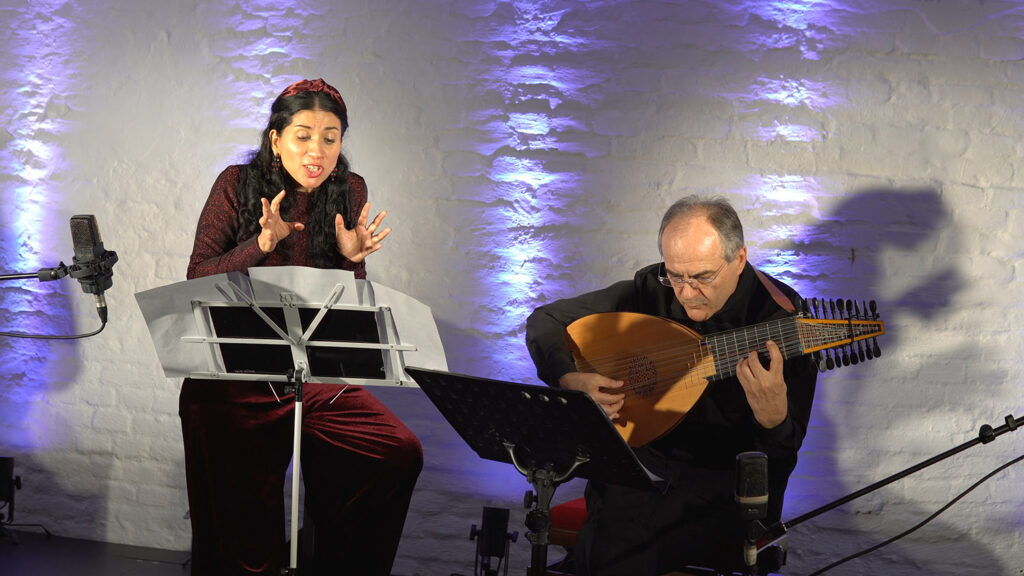
I am very happy to have done this musical collaboration with my dear and admired Hermann Platzer who masterfully interprets the “Lute”. The origins of this instrument, they date back to more than 4.000 years, And it has gone through many transformations over time.
“Come Again, Sweet Love” It is one of the best known songs of the composer And English laudist John Dowland, written at the end of the 16th century. Was posted in his collection of 1597 titulada First Booke of Songes or Ayres, A pioneer work for allowing each piece to be interpreted both as a solo song accompanied by lute and several voices.
The lyrics of the song is a plea passionate about the return of lost love. With a melancholic and deeply emotional tone, reflects the Renaissance sensitivity towards unrequited love and the pain of dissatisfied desire. This type of love poetry was very popular in the Elizabethan court, y Dowland, With his talent to unite music and emotion, He knew how to capture it masterfully.
Here is the translation
Come again, Sweet love, Now I invite
to your graces that abstain
CAUSE DELETE,
a ver, Scuchar, tap, big, expire,
with you in the sweetest sympathy.
Come again, So I can stop crying,
For your cruel disdain.
Now I feel abandoned and sad
Feel, sigh, cry, I faint, I die,
In deadly pain and endless misery.
Tender love, your hurtful dart starts,
because I can't pierce your heart;
yo, That I commit myself
With sighs and tears hotter than your arrow
I try while she laughs triumphantly.
Come again, sweet love: John Downland
Voice: Patricia Trujano Granados
Laud: Hermann Platzer
Video and audio: Alexander Uhl
Special thanks to “VIBRIA” for providing us with the space to make our recording live
Links: https://www.vibria.art/
http://hermannplatzer.at
https://alexanderuhl.die-amsel.at
John Dowland
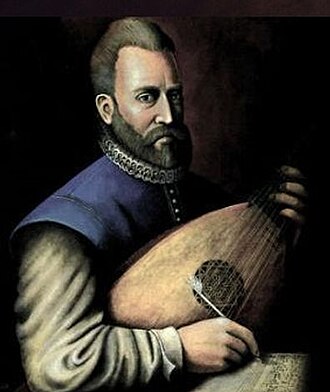
John Dowland (1563–1626) was a composer, English laudista and singer of the Renaissance, known above all for its melancholic songs for lute. His music is considered one of the most important of the English musical tradition of the late 16th and early seventeenth century, And he has influenced numerous composers long after his death.
Dowland was probably born in 1563, Maybe in London or Dublin, although the details of their origin are not known with certainty. Little is known about your youth, But from an early age he showed a remarkable talent for the lute, A very popular rope instrument at the time, used both for accompaniment and in solo interpretations.
He began his musical career probably as laudist at the service of a noble, before moving to France in 1580, where he worked as a musician in the court of the English ambassador to Paris. In 1588 He returned to England and in 1589 obtained the title ofBachelor of Music At Oxford University. Despite his growing reputation, He did not get a fixed square in the court of Queen Elizabeth I, A fact that he later attributed to his Catholic faith, little accepted in the Protestant England of the time.
In between 1594 y 1596 traveled through Italy and Germany and requested, Without success, A position in the court of the Duke of Mantua. Finally, in 1598 He was hired as laudista in the court of King Cristian IV of Denmark, In Copenhagen. There he received a generous salary as a real musician and spent several years in Denmark, Although he made regular visits to England. In 1606 His contract was canceled.
It was not until 1612, Under the reign of Jacobo I, that Dowland finally obtained an official position like laudista in the English Court, a late recognition of your talent. He maintained that position until his death in London 20 February 1626.
Dowland's work stands out especially for his songs for lute, published in several collections such asFirst Booke of Songes or Ayres (1597), Second Booke of Songs (1600) yThird and Last Booke of Songs (1603). One of his most famous pieces isFlow my tears, considered an emblem of Renaissance melancholy. Their compositions are characterized by refined melodies, expressive texts and a deep emotional load. In addition to songs, wrote numerous instrumental pieces, Like fantasies, Pavanas and gallant for lute.
Dowland's music was very popular in his time and spread widely through Europe. Nevertheless, After his death he fell into oblivion for several centuries. It was not until the twentieth century that his work was rediscovered in the context of historical interpretation and has won the admiration of the modern public again.
Nowadays, John Dowland is considered one of the greatest English composers in the Renaissance. Your ability to express deep emotions, especially melancholy, It has made it a fascinating figure for both musicologists and contemporary interpreters and listeners.
The history of the lute and its development towards the guitar
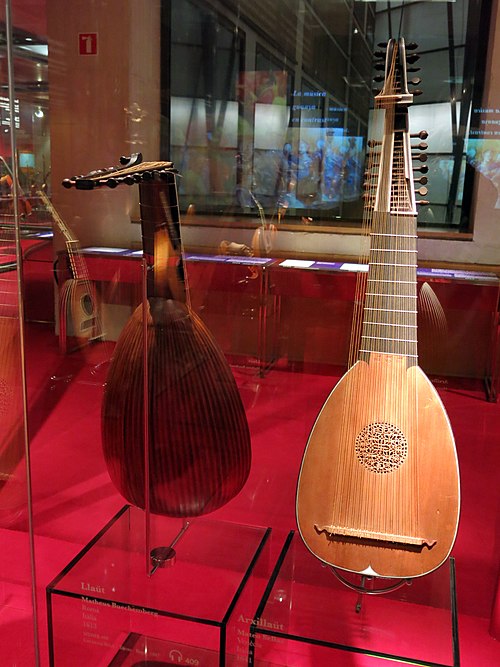
The lute is one of the oldest and most versatile string instruments in Europe, And for centuries he played a central role in the history of music. Its origin dates back to antiquity, And its evolution had a great influence on the creation of other subsequent instruments, especially the guitar.
The European lute derives from an oriental instrument: theʿŪd Arabic. This was introduced to the Iberian Peninsula probably in the seventh century through Muslims (The Moors) And from there it spread throughout Europe. In fact, The word “lute” It comes from ArabicAl -ʿūd, where “al” is the defined article. Over time, That article was integrated into the name of the instrument.
During the Middle Ages, The lute was mainly used as an accompaniment instrument. Nevertheless, From the fourteenth century and especially in the fifteenth and sixteenth centuries, He began to have an outstanding role in both courtly and bourgeois music. At this time, The European lute adopted its own form, With a pear -shaped resonance box, A curved mast and several orders (strings pairs refined in unison or octaves). He played with his fingers or plucro, And it was suitable for both vocal accompaniment and solo pieces.
The lute boom occurred between the 16th and 17th centuries, especially during the Renaissance. He was considered the most noble instrument of artistic music. Composers like John Dowland (England), His neus (Germany) o Silvius Leopold Weiss (Germany) They wrote extensively for the lute, creating dances, fantasies, Preludes and songs. At that time, The lute enjoyed a popularity similar to that of the piano or the guitar today.
With the arrival of Baroque, The instrument changed again. The baroque lute could even 13 orders (26 strings), What made him more complex to play. Despite its sound wealth, He was losing prominence in the face of instruments such as the Clavecín and, later, The piano. During the 18th century, Its use decreased significantly until almost disappearing from common musical practice.
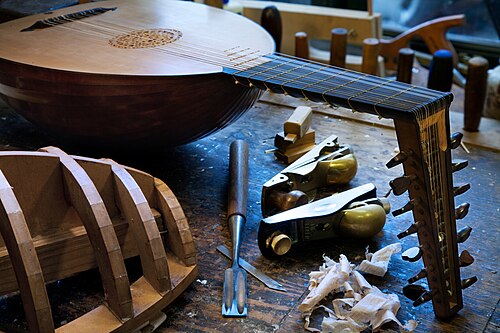
Parallel to the lute, Other clusted string instruments arose with a simpler technique, like thevihuela In Spain, which is considered a direct predecessor of modern guitar. Unlike lute, that had double ropes and a curved mast, The vihuela (and later the baroque guitar) It had simple strings and a more straight design, which offered a brighter and more direct sound.
In the eighteenth and nineteenth centuries, Of these models the classic guitar evolved as we know it today. The Spanish builder Antonio de Torres (1817–1892) It was key in this transformation, since it standardized the form, Size and construction of the modern instrument. The guitar acquired six simple strings, A larger box and a reinforced harmonic lid, which allowed greater volume and projection.
Nowadays, The lute has been rediscovered thanks to historical interpretation, While the guitar has become one of the most popular instruments in the world, present in genres that range from classical music to rock. Both instruments, although different, They share a common story that began in the East and transformed European music for centuries.